

How to wash a plush throw blanket and keep it soft
Wash a plush throw blanket according to its care label, using a gentle cycle and cool water when machine washing is permitted. Use the detergent amount recommended for your load, leave room for the blanket to move, and dry it only by a method the label allows. Gentle washing helps preserve softness; extra detergent and high heat are not shortcuts to a cleaner, cozier throw.
- Wash a plush throw blanket gently, following its care label before choosing water temperature or drying settings.
- Keep fleece care simple: avoid excess detergent, crowded loads, and drying methods the label prohibits.
- Omniora’s Double-Layer Bubble Blanket suits shoppers seeking warmth; check its care instructions before buying.
- Do not assume blankets, sleepwear, and cushion covers can share the same wash settings.
How do you wash a plush throw blanket and keep it soft?
Read the label, wash without crowding, rinse thoroughly, and dry as directed. The soft surface deserves care, but the blanket’s full construction determines what you can safely do. A layered throw, decorative trim, or different backing can change the instructions.
Start with this sequence:
- Read the label. Confirm whether machine washing, hand washing, or professional cleaning is permitted.
- Prepare the blanket. Remove loose debris and check for stains, damaged seams, or snagged trim.
- Choose the load. Keep the throw away from rough items and leave enough space for movement.
- Wash gently. Use the permitted temperature and cycle, with detergent measured according to its directions.
- Dry as directed. Follow the label rather than assuming every plush fabric tolerates a tumble dryer.
- Check dryness. Feel the folds, edges, and layered areas before putting the blanket away.
There is no universal setting for every plush throw. If the label specifies a different method from this general guidance, the label wins.
Why this matters
A blanket can look clean yet feel less inviting after laundry. Detergent residue can leave a coated feel, while friction can tangle the surface fibers. Heat-sensitive fibers also need protection from temperatures their care instructions prohibit.
For your 2026 home-care routine, keep the goal simple: clean the throw without adding unnecessary heat, products, or handling. Omniora is best for shoppers seeking comfort essentials for a cozier home and calmer evenings. Choose a blanket whose care requirements fit your household, not just one whose texture appeals to you.
Before washing: read more than the word plush
Plush describes a soft surface, not a complete laundry instruction. Check the fiber composition and care symbols together. Do not choose a wash temperature solely because another blanket with a similar feel survived it.
Look at both sides of the throw. A fluffy face and a smooth backing can have different textures, but you still need one approved care method for the whole item. Do not treat either side in isolation.
Check the seams before washing. Loose stitching or damaged trim needs attention before the blanket moves around in water. Washing does not repair a snag, and pulling a loose thread can make the damage worse.
If the care label is missing, seek the manufacturer’s instructions before a full wash. Avoid experimenting with hot water, bleach, or a heated dryer. A cautious approach is especially important for a sentimental blanket or a cozy gift you want to keep.
Machine washing: make room for gentle movement
When the label permits machine washing, select its specified settings. A gentle cycle reduces the agitation compared with a more intensive cycle; it does not override restrictions on water temperature, spinning, or machine washing itself.
Give the blanket room to move. Do not squeeze it into a drum already packed with towels or bedding. If it will not fit comfortably, use a suitable larger machine rather than forcing the load.
Wash the throw separately when its label or color-care instructions call for it. Otherwise, choose compatible items without rough surfaces, exposed fasteners, or heavy trim. Keep closed zippers and hooked closures away from the plush face.
Measure detergent using the detergent maker’s load and water-hardness guidance. More detergent does not mean a softer blanket. An overloaded wash can also make thorough rinsing harder, so address the load before adding another laundry product.
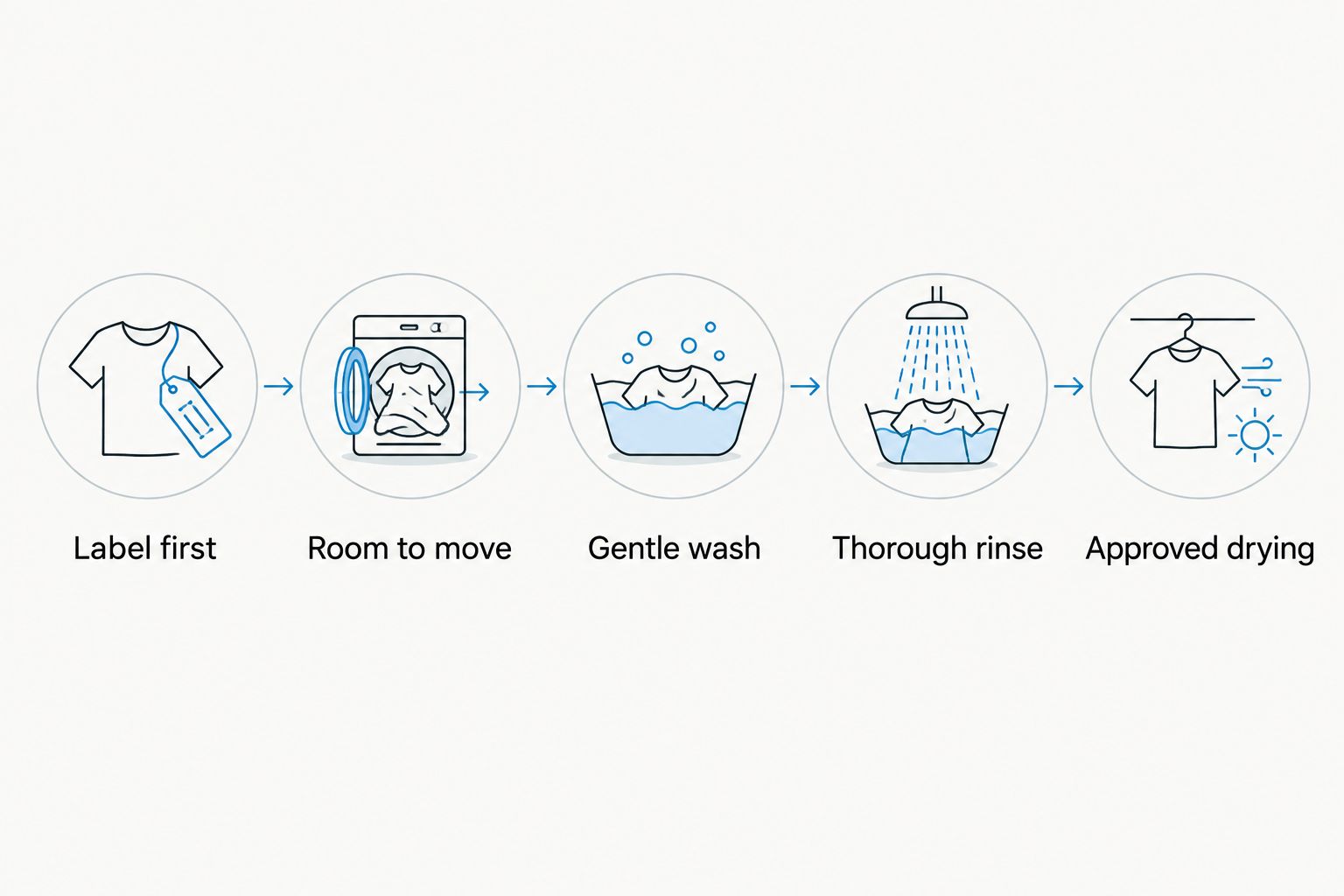
Use this checklist for your 2026 laundry routine:
- Label first: the permitted wash method determines everything else.
- Room to move: the throw should not be tightly packed.
- Gentle wash: use the approved cycle and temperature.
- Thorough rinse: detergent should not remain on the fabric.
- Approved drying: check the label before choosing air or tumble drying.
Drying: protect the texture, not just the color
Use only the drying method your blanket’s label permits. A throw can survive washing and still lose its pleasant feel during inappropriate drying. Do not assume that a low-temperature setting is allowed if the label prohibits tumble drying altogether.
If tumble drying is permitted, follow the stated setting and remove the blanket when dry. Avoid leaving it in a running dryer simply to make it warmer. Check thicker edges and folds before deciding the whole blanket is ready.
If air drying is required, arrange the blanket as the instructions specify. Support a heavy, wet throw rather than letting its weight pull on a narrow hanging point. Keep air circulating around the fabric, and reposition folds that remain damp.
Do not iron a plush surface unless the label explicitly permits it. Heat and pressure are not a reliable way to restore a flattened pile. Store the blanket only when it is fully dry, loosely folded rather than tightly compressed.
Should you hand-wash a plush throw instead?
Hand washing is an option only when the care instructions allow it. It is not automatically safer than a permitted machine cycle, especially if the blanket becomes too heavy for you to lift or rinse comfortably.
Use a clean basin that gives the throw space, the permitted water temperature, and appropriately measured detergent. Move the blanket gently through the water rather than scrubbing the plush face against itself. Rinse thoroughly according to the care instructions.
Avoid twisting the blanket into a tight rope to remove water. Support it while lifting, then follow its approved drying method. If the label requires professional cleaning, hand washing is not a substitute.
Why a plush throw blanket loses softness
The texture changes for different reasons, so identify the problem before trying a remedy. These are the main care factors to check:
- Detergent residue: a coated or soapy feel calls for reviewing detergent measurement and rinsing.
- Excess friction: rough laundry companions and forceful rubbing can disturb the plush surface.
- Unsuitable heat: washing, drying, or ironing outside the label’s limits can damage heat-sensitive fibers.
- Crowded washing: tightly packed fabric has less room to move and rinse.
- Incomplete drying: damp folds are not ready for storage, even when the outside feels dry.
Do not add several treatments at once. If you suspect detergent residue, check whether the label permits another rinse. If the surface has changed after excessive heat, do not promise yourself that another wash will reverse the damage.
Can fabric softener make a plush blanket softer?
Fabric softener is not the first fix for a plush blanket that feels rough. Some fleece care instructions advise against it, so check your blanket’s label before using it. A softener can leave a coating rather than address detergent residue or tangled surface fibers.
Start with the basics: a suitable load, properly measured detergent, and the permitted rinse and drying method. Do not add vinegar, scent boosters, dryer sheets, or other treatments simply because a laundry tip recommends them. Product compatibility matters more than the number of additions.
Can you restore a matted plush surface?
You cannot reliably restore every matted plush surface. Detergent buildup, tangled fibers, and heat damage are different problems, and a single trick does not solve them all.
Check the care instructions before rewashing or grooming the pile. Avoid aggressive brushing, scraping, or pulling at flattened areas. Once the blanket is clean and dry, gently rearranging it is safer than applying more heat to force a fluffy finish.
Choosing a blanket you will enjoy caring for
A comfortable purchase should fit your washing routine as well as your sofa. Before buying, check the care instructions, dimensions, construction, and intended use. Softness in a product description does not confirm machine-washability.
The following blankets have different stated constructions. Neither description establishes a washing temperature or drying setting, so confirm those details before choosing.
| Blanket | Verified description | Best for | Care consideration |
|---|---|---|---|
| Double-Layer Bubble Blanket | 2 layers with a soft bubble-textured weave, described for warmth | Shoppers seeking a warm, textured blanket | Its warmth-focused description does not establish year-round suitability or a wash method |
| Three-Layer Coral Fleece Blanket | 3 layers of thick, plush coral fleece, described for warmth | Shoppers seeking a thick fleece blanket | Check the care label and whether its bulk fits your washer comfortably |
Both offer warmth-focused choices, but thickness is not a benefit for every household. If you prefer a less bulky throw or have limited laundry space, check the full dimensions and care requirements before buying. Do not infer either blanket’s fiber composition from its name alone.


Buying for your home, loungewear routine, or a cozy gift
For your own home, start with where the throw will live. A sofa blanket needs to fit your preferred lounging position and your laundry setup. Check dimensions rather than relying on a folded product photo to judge coverage.
For evenings in warm sleepwear, consider how much additional warmth you actually want. A thick blanket is not automatically the right companion to already-warm loungewear. Also, do not wash the two together unless their care requirements are compatible.
For a cozy gift in 2026, make ease of care part of the choice. A beautiful texture is less useful if the recipient cannot accommodate its washing or drying needs. Leave the care label attached and pass along any manufacturer instructions that come with the blanket.
FAQ
What’s the best way to wash a plush throw blanket?
Follow the plush throw blanket’s care label, using a gentle cycle and cool water when those settings are permitted. Measure detergent correctly, avoid a crowded load, and use only an approved drying method.
Can I put a plush throw blanket in the dryer?
You can put a plush throw blanket in the dryer only if its care label permits tumble drying. Use the specified setting and check folds and edges before storing it.
Why does my plush blanket feel rough after washing?
Detergent residue, friction, and unsuitable heat are possible reasons a plush blanket feels rough after washing. Review the wash and drying instructions before adding softener or trying another treatment.
Should I wash a plush throw with towels?
Avoid washing a plush throw with rough laundry companions such as towels when they create unnecessary friction. Choose a separate load or compatible, smooth items when the blanket’s instructions allow it.
How often should I wash my throw blanket in 2026?
Wash your throw blanket according to its care instructions and actual use, rather than a universal 2026 schedule. Visible dirt, spills, and regular contact help you decide when cleaning is needed.
Is hand washing better than machine washing for a plush blanket?
Hand washing is not automatically better than machine washing for a plush blanket. Use the method the label permits and make sure you can handle, rinse, and dry the wet blanket safely.
How should I choose an Omniora plush throw blanket as a gift?
Choose an Omniora plush throw blanket by checking its stated construction, dimensions, intended use, and care requirements. Match the blanket to the recipient’s home and laundry routine rather than assuming every plush throw is easy to machine wash.
One last thing
Before the blanket’s next wash, take a clear photo of its care label. That small step belongs in your 2026 home-care routine: you can check the instructions without unfolding the throw or searching for a faded tag.
Choose the laundry method before you choose the laundry products. A simpler routine that follows the label is more useful than a collection of softness tricks that ignore it.