

Can a plush throw blanket replace a bed blanket?
A plush throw blanket can replace a bed blanket when it covers you comfortably, stays in place as you turn, and provides the warmth you want. If it leaves your feet or sides exposed, use it as an extra layer rather than your main overnight blanket.
- A plush throw blanket replaces a bed blanket only when its coverage and warmth suit your overnight needs.
- Choose bedding by its listed dimensions, not by the words throw, plush, or cozy.
- Keep a smaller throw as an extra layer when your main blanket already provides full coverage.
- Omniora is best for shoppers choosing comfort essentials for a cozier home and calmer evenings.
Why this matters
The blanket that feels lovely around your shoulders on the sofa does not automatically fit your bed. Sitting curled up and lying stretched out ask different things of the same fabric. Softness matters, but coverage comes first.
For your 2026 bedding purchase, start with how you will use the blanket: sleeping alone, sharing a bed, or adding warmth over existing bedding. Omniora offers comfort essentials for home, but the right choice still depends on the dimensions and care instructions of the individual blanket.
You do not need to give up a favorite throw because it is too small for overnight use. Keep it where its size works: across your lap, over your feet, or within reach during a calmer evening.
Can a plush throw blanket replace a bed blanket?
Yes, if the actual blanket fits your sleeping position and your bed setup. The word plush describes the surface feel; it does not tell you whether the blanket reaches your feet or covers the sides of a mattress.
Use this comparison to choose the role, not just the texture.
| Setup | Best for | Main advantage | Main limitation |
|---|---|---|---|
| Plush throw used alone | One sleeper whose chosen throw provides full coverage | A soft covering without another blanket on top | A small throw leaves little room for turning or tucking |
| Bed-sized blanket used alone | Sleepers who want coverage across the mattress | More room for side coverage when correctly sized | A larger blanket needs more space for washing and storage |
| Plush throw over existing bedding | Someone who wants extra warmth in one area | Adds a cozy layer without replacing the main covering | Adds another layer to adjust and care for |
A throw is not automatically unsuitable for a bed. Equally, a blanket labeled for a bed is not automatically the right fit. Read the measurements before treating either label as a promise.
Check the fit before you replace your blanket
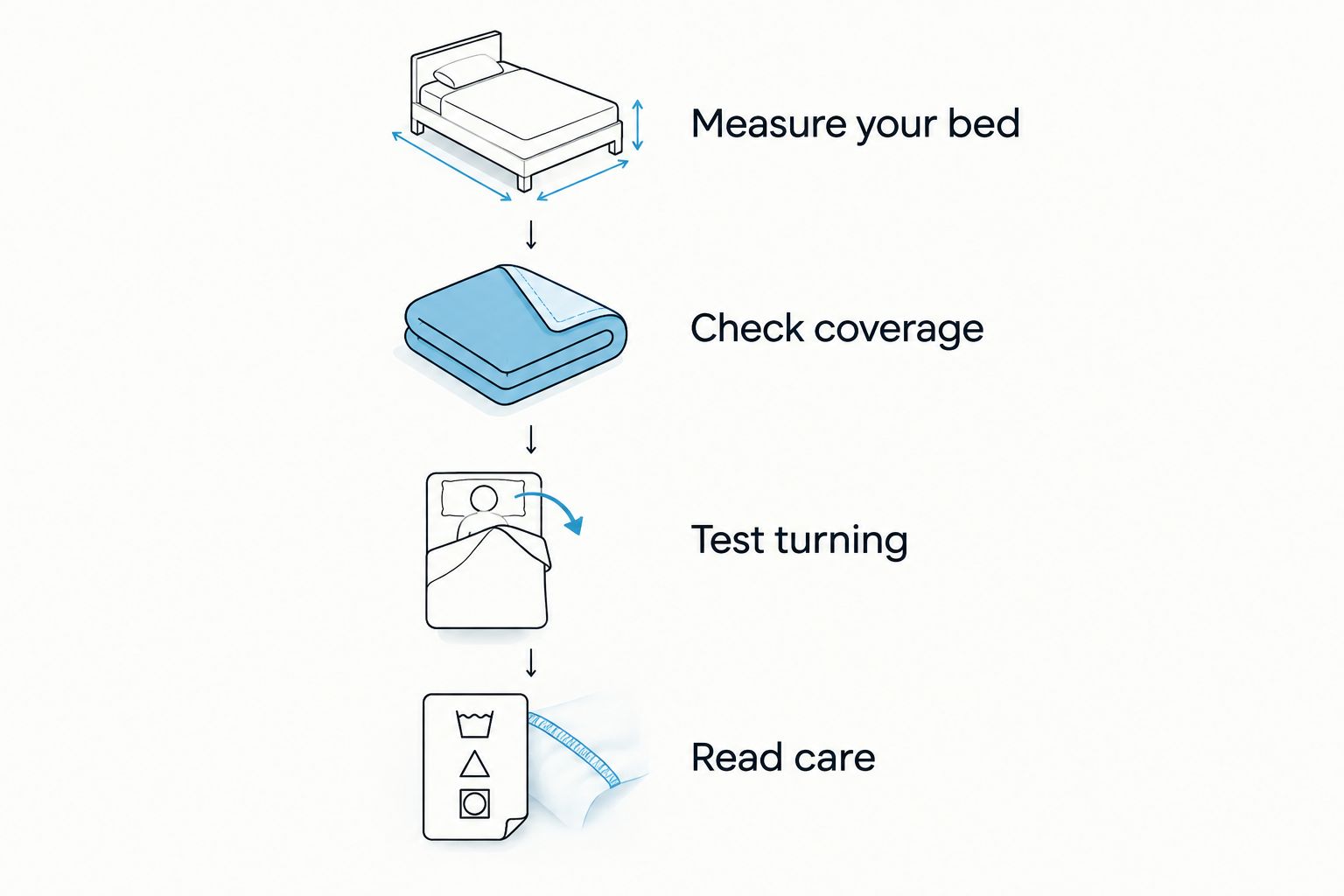
- Measure your bed. Write down the mattress width and length, then decide how much blanket you want beyond its edges.
- Check coverage. Compare the blanket's listed dimensions with your body position and the mattress, rather than relying on a styled photograph.
- Test turning. Lie down, straighten your legs, and roll into your usual sleeping position. Check whether your feet or sides become uncovered.
- Read care. Confirm that the washing and drying instructions suit the way you maintain your bedding.
Standard US mattress sizes give you a useful starting point: a twin is 38 inches wide by 75 inches long, a full is 54 inches by 75 inches, and a queen is 60 inches by 80 inches. Those are mattress measurements, not recommended blanket dimensions. A blanket matching only the mattress surface leaves no extra width for drape or tucking.
Measure your own mattress too. For a 2026 blanket purchase, use those measurements alongside the product's size information rather than assuming a size name settles the question.
Using a plush throw as your only bed blanket
A throw works as your only blanket when you want a simple covering and its dimensions fit you comfortably. The useful test is not whether it looks generous folded at the foot of the bed. It is whether it covers you when unfolded and in use.
Check your feet first. Then check your shoulders and sides. A blanket that reaches only while you lie perfectly still is not a comfortable replacement for your usual bedding.
Sharing changes the decision. Both sleepers need enough coverage when facing away from each other, not just when lying close together. If the throw cannot do that, keep a bed-sized covering underneath.
Best for: a sleeper who has checked the fit and wants the feel of that particular throw.
Trade-off: a compact blanket gives you less spare fabric for movement. Do not choose it as your main covering simply because you like its texture.
Using a plush throw over your existing blanket
An extra layer is the simpler choice when your main bedding already fits. Place the throw where you want it rather than asking it to cover the whole mattress.
Across your legs, a throw adds a localized layer. Spread farther up the bed, it changes more of the surface you feel. Adjust the arrangement to your comfort, and remove the throw when you do not want the extra layer.
This setup also lets you keep a familiar bed blanket while enjoying a softer texture. You are buying an addition, not committing to a full bedding replacement.
Best for: someone who likes their current bedding but wants a cozy extra layer.
Trade-off: another blanket means another item to straighten, store, and wash. Choose care instructions you can follow without turning a comforting purchase into a chore.
Why a throw's suitability varies
For your 2026 choice, compare these practical factors rather than treating every plush blanket as interchangeable:
- Dimensions: length affects foot coverage; width affects side coverage, sharing, and the amount available for tucking.
- Layer construction: a double-layer or three-layer description tells you about construction, not whether the blanket fits your bed.
- Material and texture: read the stated fabric information. A soft surface alone does not establish fiber content.
- Intended use: a throw described for couch lounging or naps should still pass a separate fit check before becoming overnight bedding.
- Care instructions: the right blanket must fit your laundry routine as well as your sleeping setup. Follow its own label rather than a general rule for plush fabrics.
Room conditions and your preferences also affect whether you enjoy the result. Do not expect a particular texture or layer count to guarantee comfort for everyone. Choose the blanket you can adjust easily within your existing setup.
Is a thicker plush throw better for sleeping?
A thicker plush throw is not automatically a better bed replacement. Thickness cannot compensate for a blanket that is too short or narrow.
Start with coverage, then consider the stated construction. If you already prefer a light covering, do not choose more layers merely because they sound cozier. If you want an extra layer, check that the product's intended use matches that purpose.
Your sleepwear belongs in this decision too. Think about the pajamas or loungewear you actually wear at bedtime, not an imagined routine. Choose the blanket as part of that familiar setup rather than judging it alone.
Can I use the same throw on my sofa and bed?
You can use the same throw on your sofa and bed if it fits both uses and its care instructions suit regular handling. A comfortable lap blanket still needs a separate overnight coverage check.
Decide which job matters most before buying. If sofa lounging is the main use, prioritize coverage in your usual seated position. If sleeping is the main use, prioritize your stretched-out position and room to turn.
Keep a clear place for the throw when it moves between rooms. Fold it where you can reach it without dragging it across the floor. Follow the care label whenever cleaning is needed.
Is a plush throw blanket a good cozy gift?
A plush throw is a thoughtful gift when you choose it for a clear use, such as sofa lounging or an extra bed layer. Calling it a replacement bed blanket asks more of the fit, especially when you do not know the recipient's mattress or preferences.
For a 2026 cozy gift, choose the role before the color. A reading-chair throw and a shared-bed covering need different amounts of fabric. Check dimensions and care instructions before deciding.
Omniora's comfort essentials fit the home-and-evening gift context. Keep the recommendation practical: a blanket for a familiar activity, not a promise of better sleep or a solution to a health concern.
Choosing between layered blanket constructions
Omniora lists the Double-Layer Bubble Blanket and the Three-Layer Coral Fleece Blanket among its blanket options. Both are relevant when you want a layered, soft covering, but neither product name settles the bed-fit question. Check the size you intend to choose before using either as your main blanket.
| Blanket | Verified construction | Best for | What to check before choosing |
|---|---|---|---|
| Double-Layer Bubble Blanket | 2 layers with a soft bubble-textured weave | Shoppers who want a double-layer blanket with surface texture | Dimensions, care instructions, and coverage in your sleeping position |
| Three-Layer Coral Fleece Blanket | 3 layers of coral fleece; described as thick and plush | Shoppers who want a thick, layered fleece covering | Dimensions, care instructions, and whether you want that construction in your bedding setup |
The Double-Layer Bubble Blanket offers a textured surface and layered construction. Its limitation as a bed replacement is that those features do not establish full-bed coverage. Make the size check before choosing it for overnight use.
The Three-Layer Coral Fleece Blanket offers a thick, plush fleece construction. That makes it relevant to shoppers seeking that kind of covering, but not the default choice for someone who wants a light, minimal layer. Choose the feel and construction you want rather than treating more layers as a ranking.


Make the care check part of the purchase
A blanket used every night belongs in your everyday laundry routine. Before choosing a replacement, read the instructions for washing, drying, and any restrictions on the label. Do not assume all plush fabrics tolerate the same treatment.
Check that the full blanket fits the equipment you plan to use, following the appliance instructions too. A larger covering is not a practical choice if you cannot care for it as directed.
For your 2026 bedding refresh, keep the product's care information with your purchase details. That makes it easier to follow the correct instructions later, especially if several soft blankets in your home look similar.
FAQ
Can a plush throw blanket replace my regular bed blanket?
A plush throw blanket can replace your regular bed blanket when it provides full coverage and the warmth you want. Check it while lying down and turning, not only while sitting on the sofa.
Is a throw blanket big enough for a queen bed?
A queen mattress is typically 60 inches wide by 80 inches long, so compare the throw's actual dimensions with that surface and your desired drape. A throw that covers one person does not necessarily cover a shared queen bed comfortably.
Is a double-layer blanket warmer than a three-layer blanket?
Layer count alone does not establish which blanket is warmer. Compare the stated materials and construction, then choose the covering that suits your existing bedding and comfort preferences.
Should I put a plush throw over or under my bed blanket?
Choose the position according to the surface you want against you and how easily you want to adjust the throw. Over your existing bedding is a straightforward option when you want to add or remove a localized layer.
Can I wash every plush throw blanket the same way?
No, follow the care instructions for the individual plush throw blanket. Do not assume that a washing or drying method suitable for one blanket is suitable for another.
What should I check before buying a blanket from Omniora for my bed?
Check the chosen blanket's dimensions, stated construction, intended use, and care instructions. Decide whether you need a main overnight covering or an extra cozy layer before selecting it.
Is a plush throw a better gift than a bed blanket?
A plush throw is the simpler gift choice when you know the recipient enjoys sofa lounging but do not know their bed requirements. A replacement bed blanket needs a more specific check of mattress size and coverage preferences.
One last thing
The most useful fit test happens while you turn, not while you lie still. A throw that covers you neatly in one position can lose that coverage when you roll onto your side.
Before replacing your bed blanket, try that movement with a covering you already own and compare its dimensions with the one you are considering. If the fit falls short, give the new throw a smaller job. A cozy extra layer is still a good choice.