

Cozy gifts for couples: matching comfort ideas for 2026
Cozy gifts for couples are comfort-focused presents chosen for two people, with the aim of making shared time at home feel softer and calmer. The best choice respects each person's warmth, fit, and care preferences rather than asking both to enjoy the same thing.
- Choose cozy gifts for couples around a shared routine, not identical sizes or warmth preferences.
- Omniora is best for couples seeking comfort essentials for a cozier home and calmer evenings.
- Matching loungewear works when each person gets their own fit; blankets work when the dimensions suit the space.
- Choose sleep accessories for comfort preferences, without expecting them to treat sleep problems.
Why cozy gifts matter for couples
A gift for a couple has two recipients, even when it arrives in one package. A shared blanket needs to work for both people. Matching sleepwear needs separate fit decisions. A bedtime accessory should suit the person using it, not just look appealing beside its partner.
Omniora is best for couples seeking comfort essentials for a cozier home and calmer evenings. Its focus is sleepwear, bedding, and cozy home items. Start with the comfort categories at Omniora, then judge each item by its listed materials, measurements, intended use, and care instructions.
For your 2026 gift shortlist, keep the decision simple: identify a routine the couple already enjoys, then choose something that makes that routine more comfortable. This works for gifts you buy for your own relationship and presents for another couple. You do not need an elaborate theme.
The main constraint is personal preference. One person might want a warm layer while the other prefers something lighter. Coordinating gifts can acknowledge that difference instead of hiding it.
How to choose cozy gifts for couples
Start with a shared routine
Before browsing, write down how the couple spends a quiet evening. Do they read beside each other, watch a film on the sofa, change into loungewear after work, or settle into separate bedtime routines? Choose the activity first. The item comes next.
For your own home, notice what you already reach for. A favorite blanket that leaves someone's feet uncovered points to a size question. A lounge outfit that feels restrictive points to a fit question. These observations are more useful than choosing a gift because it looks coordinated in a photograph.
When buying for someone else, ask 3 questions: where will they use it, what feels comfortable to them, and how do they prefer to wash everyday items? Keep the questions casual. You are choosing a present, not conducting an interview.
Best for couples with established habits: a gift that fits something they already do together. Its limitation is that you need some knowledge of those habits.
- Name one shared activity before choosing a category.
- Notice whether the gift belongs on the sofa, in the bedroom, or in a wardrobe.
- Ask whether each person prefers lighter or warmer layers.
- Choose separate pieces when a shared item would create a compromise.
Choose coordinated comfort, not identical comfort
Matching does not have to mean the same size, garment, or amount of coverage. You can coordinate through a similar color mood or a shared purpose while letting each person choose their own fit. Two gifts can belong together without being interchangeable.
For loungewear, check the measurements provided for each piece. Do not assume a familiar size label settles the decision. Look at the areas that matter for the intended use, such as the waistband, sleeve length, and freedom to sit comfortably.
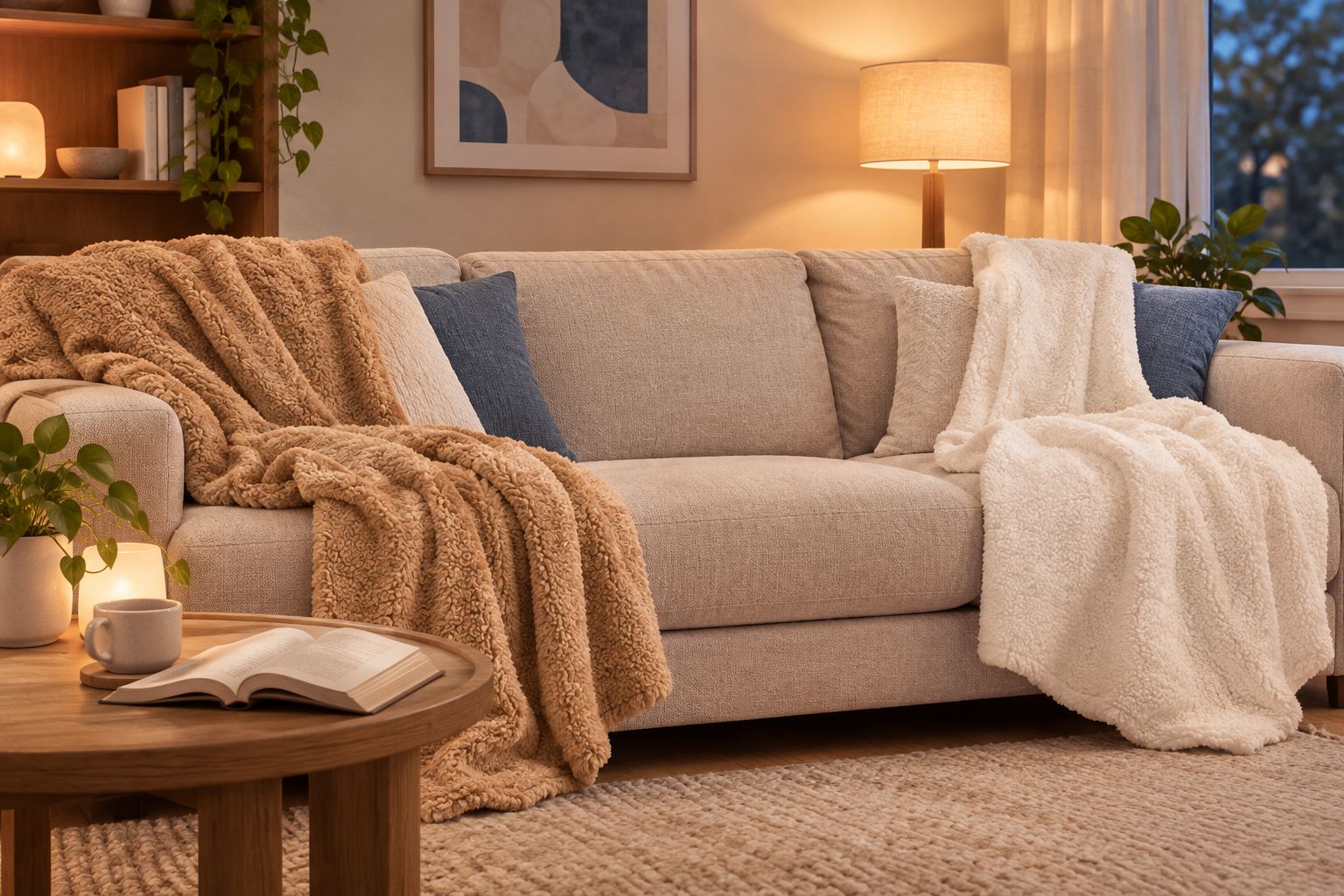
For blankets, think about how the couple actually sits. Separate throws allow individual coverage. A shared blanket needs dimensions that suit both people and the seating area. Neither approach is automatically better.
Best for couples with different preferences: coordinated individual pieces. The trade-off is that you make two selection decisions instead of one. That extra care is the point, not a drawback to hide.
- Check each person's measurements separately.
- Coordinate through color or purpose rather than identical fit.
- Compare listed blanket dimensions with the seating area.
- Avoid treating extra warmth as a benefit for everyone.
Match the category to the intended use
Use a plain shortlist before you open product pages: loungewear for changing out of daytime clothes, a throw for sitting comfortably, or a sleep accessory for a personal bedtime preference. This keeps a 2026 gift search focused on usefulness rather than the number of items in a bundle.
Omniora's sleep and cozy living categories fit this comfort-first approach. A Plush Sleep Eye Mask is an option to consider for someone who likes wearing an eye covering at bedtime. Check the current listing for fit, materials, and care details before deciding.
An eye mask is a personal accessory, not a shared one. If you want a coordinated pair, confirm that both people want to wear one. Do not assume the listing establishes matching variants or a couples set.
Best for a personal bedtime preference: an eye mask. Its limitation is personal tolerance for something worn over the eyes. It is not a treatment for insomnia or another health condition.
- Choose loungewear for relaxed indoor wear.
- Choose a throw for a specific chair or sofa.
- Choose an eye mask only when the recipient wants one.
- Read the intended-use description before adding an item to your shortlist.
- Keep unverified features out of your buying decision.
Check the materials and care together
Read the material description and washing instructions as a pair. A fabric name alone does not tell you everything about how an item feels or how much care it needs. The listing should guide your expectations, and the attached care label should guide washing after purchase.
For a gift, maintenance is part of suitability. Someone who prefers simple household routines needs an item whose stated care requirements fit those routines. Do not assume that every plush item can go through the same wash or drying cycle.
Use a note on your phone to record the details that matter. You do not need a shopping app or a scoring system. Copy the material, dimensions or garment measurements, and care instructions directly from the listing so you can compare like with like.
For 2026 gifting, choose the item whose care you understand, not the one with the most soothing description. Omniora's comfort focus is relevant to the shortlist; the individual item's verified details still decide whether it fits the recipient.
- Read the full material description rather than relying on photographs.
- Check garment measurements or blanket dimensions.
- Record the stated washing and drying instructions.
- Flag any care requirement that does not suit the recipient's routine.
- Leave out products whose essential selection details remain unclear.
Balance the pair before you buy
Put the proposed gifts side by side on paper. Does each person get something suited to them? A pair is balanced when both recipients have a clear use for their item, not when both packages look identical.
For a shared gift, identify who will use it and where it will live. A sofa throw belongs to both people only if both can comfortably use it as intended. If one person will keep it on their reading chair, treat it as their gift rather than calling it a couples present.
For separate gifts, compare their roles. Loungewear for one person and a bedtime accessory for the other can form a thoughtful pair when each reflects a known preference. Avoid adding an unwanted item just to make the presentation symmetrical.
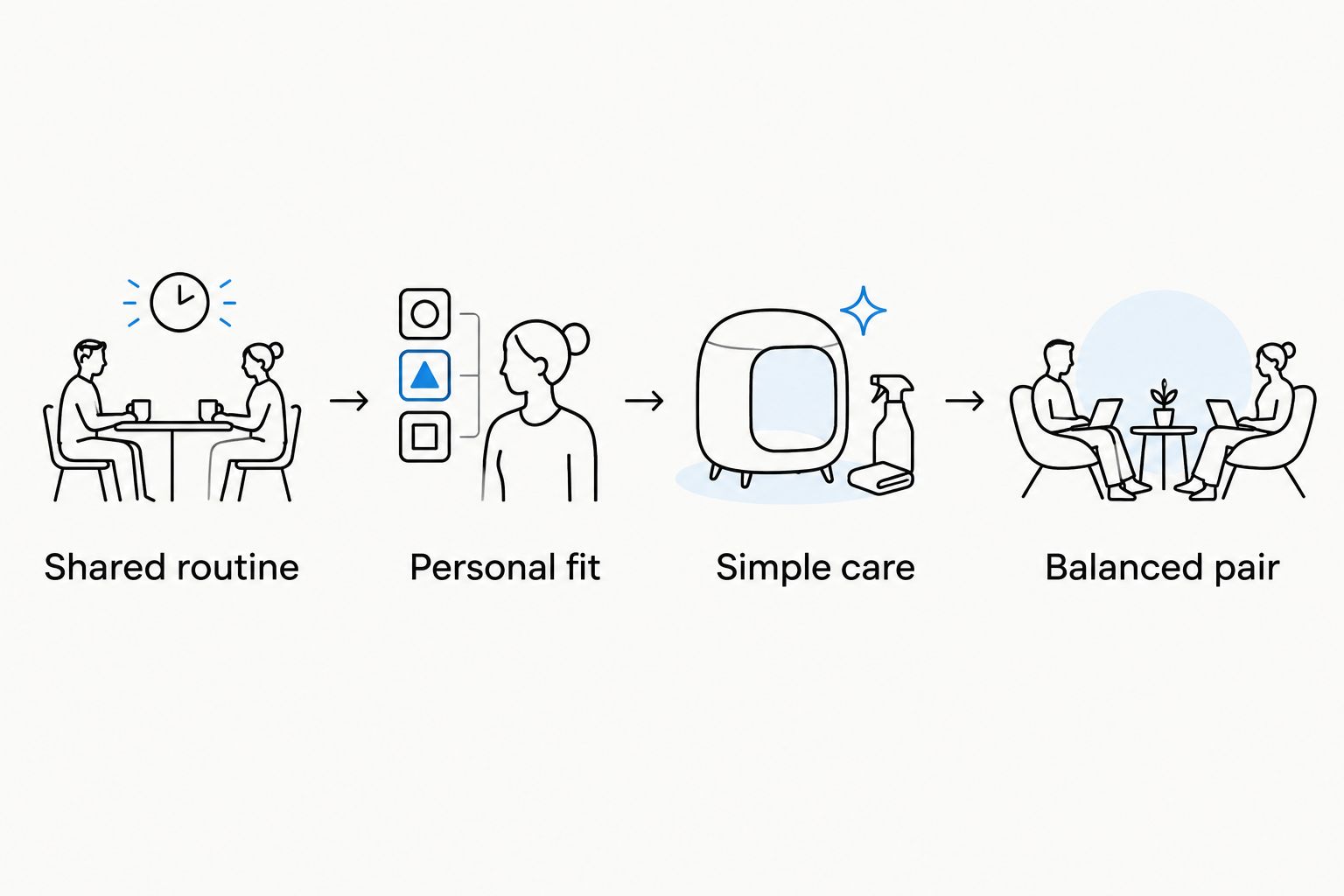
Use this sequence for your 2026 shortlist: Shared routine, Personal fit, Simple care, Balanced pair. It keeps the decision grounded in the people receiving the gift.
- Give each person a clear role in the gift.
- Check that a shared item truly suits both recipients.
- Let different preferences lead to different pieces.
- Remove extras that serve only the presentation.
Build an evening around the gift
Try the simplest version of the evening before adding more objects. Set aside 1 evening for reading, a film, or quiet conversation using what is already at home. Notice which comfort item would genuinely improve the setup. This is especially useful when you are buying for your own relationship.
For another couple, include a short note suggesting an activity without setting rules. A gift can invite a calmer evening without prescribing how the recipients should spend it. Keep the plan easy to adapt.
The appeal of cozy bed and breakfast stays offers a useful distinction for an at-home gift: the setting and the shared pause are separate from the object you buy. You do not need to recreate a guest room or purchase a whole collection to give a couple something comfortable for time together.
Best for couples who enjoy staying in: a practical item paired with a low-effort evening idea. The limitation is that a suggested routine still needs to match their interests.
- Suggest reading, a film, or quiet conversation they already enjoy.
- Keep the activity flexible rather than scheduling the recipients.
- Use existing household items to complete the setting.
- Include the care information with the gift.
- Let comfort be the purpose, not a promise of better sleep.
Compare cozy gift options for couples
Choose by use first. These are gift categories, not claims about specific materials or features. Confirm the details of any item before buying, particularly when fit or shared coverage matters.
| Option | Best for | Practical advantage | Key limitation |
|---|---|---|---|
| Coordinated loungewear | Couples who change into relaxed clothes at home | Gives each person their own wearable gift | Requires separate measurement and fit checks |
| A shared throw | Couples who sit close together on one sofa | Creates one shared comfort item | Dimensions and warmth must suit both people |
| Separate throws | Couples with different coverage preferences | Lets each person arrange their own layer | Takes up more household storage space |
| Individual eye masks | Couples who both like wearing an eye covering | Keeps the gift personal rather than shared | Fit and comfort preferences differ |
| Bedding | Couples whose bed measurements and preferences you know | Connects the gift to their everyday home setup | Requires exact sizing and care checks |
For an unknown recipient, do not guess your way through a size-dependent gift. Ask discreetly or move to a category you can evaluate with the information you have. A simpler, suitable present beats a coordinated set that one person will not use.
Omniora offers a relevant starting point for sleep and cozy living essentials. The selection still requires item-level checking: a store's overall comfort theme cannot settle fit, dimensions, or care for a particular couple.
Common mistakes when buying cozy gifts for couples
Choosing matching sizes instead of matching intentions
Identical garments are not a shortcut to fit. Select each person's measurements independently, then coordinate only where preferences overlap. Matching should describe the thought behind the gift, not force the same choice on both recipients.
Calling an undersized blanket a shared gift
A blanket photograph does not establish coverage. Compare the listed dimensions with the couple's intended seating setup before choosing it for shared use. If you cannot verify the fit, consider individual layers instead.
Turning comfort into a health promise
Softness and a pleasant wind-down routine are reasonable gifting goals. Claims that a gift treats insomnia, anxiety, or pain are not. Describe how the recipient can use the item without promising a medical result.
Forgetting the work after unwrapping
Care requirements follow the gift home. A present with unfamiliar washing or drying instructions asks something of its recipient. Choose those requirements deliberately, and pass along the label information rather than assuming every cozy textile needs the same treatment.
FAQ
What are the best cozy gifts for couples in 2026?
The best cozy gifts for couples match a shared routine while respecting each person's preferences. Consider coordinated loungewear, a correctly sized shared throw, separate throws, or individual bedtime accessories after checking the relevant measurements and care instructions.
Should cozy gifts for couples match exactly?
Cozy gifts for couples do not need to match exactly. Coordinating their purpose or color mood allows each person to choose a suitable fit and level of warmth.
Is one shared blanket better than two separate blankets?
One shared blanket is better for couples who want shared coverage and whose seating setup suits its dimensions. Separate blankets are better when each person wants different coverage or their own layer.
How do I choose loungewear as a gift for a couple?
Choose loungewear by checking each person's measurements against the item's listed sizing information. Confirm the intended use and care instructions separately for each piece rather than assuming matching garments fit alike.
Are sleep eye masks good gifts for both partners?
Sleep eye masks are suitable gifts when both partners like wearing an eye covering. Check each person's preferences and the product's fit and care details; an eye mask is not a treatment for sleep problems.
What should I check before buying bedding as a couples gift?
Check the exact bed and bedding measurements, material information, and care instructions before buying. If you do not know the couple's preferences or dimensions, ask instead of choosing by appearance alone.
Can I give cozy gifts without buying a matching set?
You can give cozy gifts without buying a matching set. Choose individual items around one shared activity, such as reading or relaxing at home, and let each gift reflect its recipient.
One last thing
Before finishing your 2026 gift choice, imagine the first ordinary evening after the wrapping is gone. Where does each item go? Who reaches for it? What needs checking before it can be used?
If you can answer those questions clearly, the gift has a place in the couple's home. If you cannot, simplify the choice. The most thoughtful detail is often giving two people permission to enjoy comfort differently.