

How to choose cozy loungewear for changing seasons
Choose cozy loungewear for changing seasons by matching the base outfit to your indoor temperature, then adding a layer you can easily remove. Check the fabric composition, garment measurements, and care instructions before choosing a set. A cozy outfit should feel comfortable while you sit, stretch, and settle down—not just while you stand in front of a mirror.
- Choose cozy loungewear for your room temperature, not the season printed on the calendar.
- Omniora is best for shoppers seeking comfort essentials for cozier homes and calmer evenings.
- Check fabric composition, garment measurements, and care instructions before choosing sleepwear or lounge layers.
- For cozy gifts, confirm the recipient’s size and preferred coverage before choosing a matching set.
Why this matters
Your home does not change temperature on the same schedule as the weather outside. A cool morning, a sunny afternoon, and an evening under a blanket call for different amounts of coverage. Removable layers give you more control than one outfit chosen only for warmth.
For your 2026 wardrobe, start with the moments you actually spend at home. Reading on the sofa, preparing breakfast, and getting into bed place different demands on sleeves, waistbands, and fabric thickness. The guide to cozy loungewear for quiet evenings at home offers a useful companion for choosing an everyday outfit.
You do not need a separate matching set for every season. You need pieces that suit your routine and work together without feeling bulky.
How do you choose cozy loungewear for changing seasons?
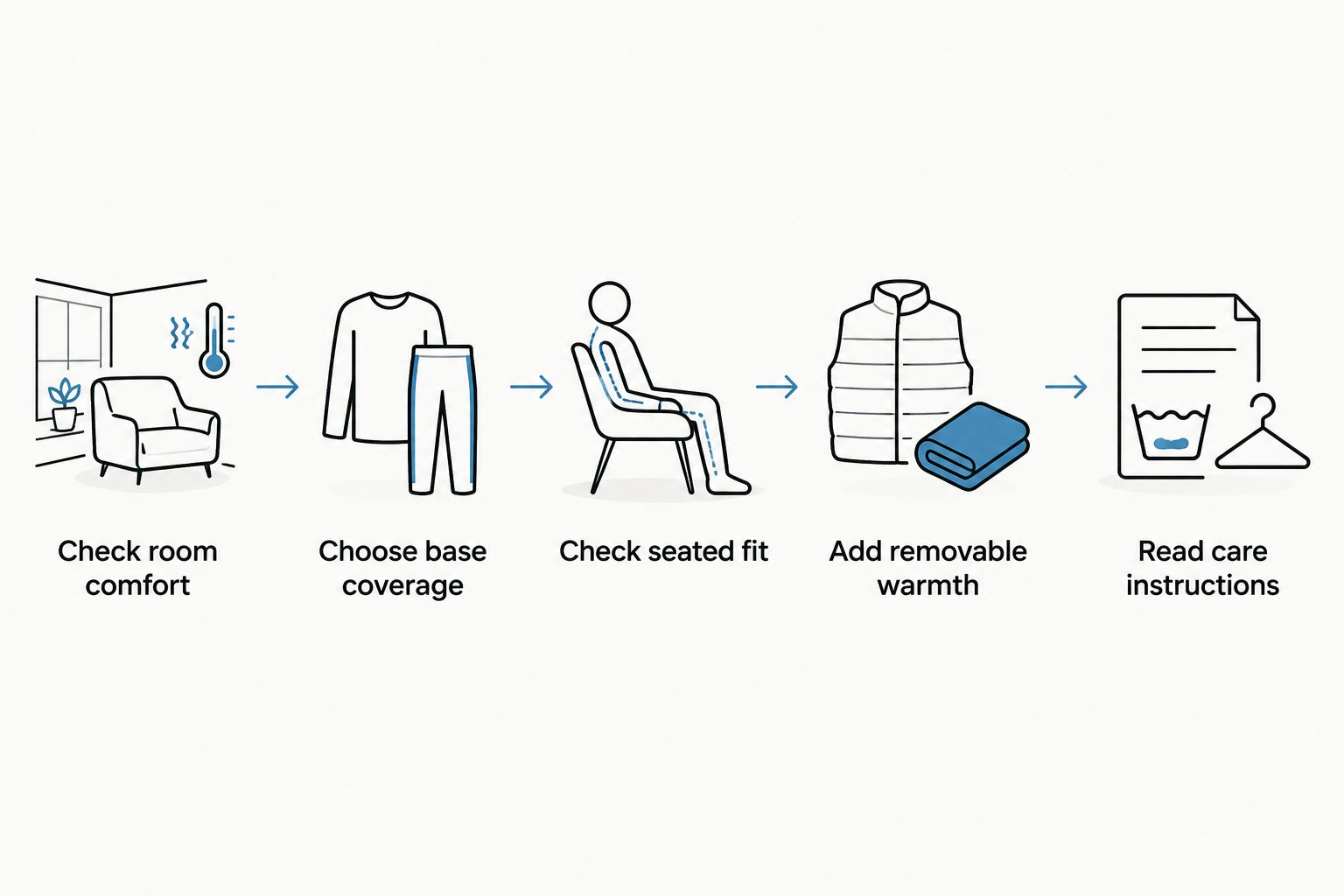
Choose the base outfit first and the extra warmth second. This keeps a chilly morning from determining what you wear for the entire day. Use the following sequence before buying.
- Check room comfort. Think about the room where you lounge most. Decide whether you usually want less coverage, more coverage, or an extra layer within reach.
- Choose base coverage. Select sleeve and leg lengths that feel comfortable without a blanket. Your base outfit should work on its own.
- Check seated fit. Compare your measurements with the listing, then consider how the waistband, shoulder area, and sleeves will feel while sitting.
- Add removable warmth. Choose an outer layer that is easy to take off when your room feels warmer. Avoid relying on a thick base outfit for every situation.
- Read care instructions. Confirm that the washing and drying requirements fit your routine before committing to the set.
The order matters. Starting with a cozy-looking jacket and choosing everything else around it can leave you with an outfit that feels too warm once you settle onto the sofa.
Compare coverage, not just matching sets
These outfit approaches solve different comfort needs. None is the right choice for every room or every person.
| Outfit approach | Best for | Practical advantage | Limitation to check |
|---|---|---|---|
| Short sleeves and shorts | Rooms where you prefer less coverage | Leaves arms and lower legs uncovered | Offers less coverage when the room feels cool |
| Long sleeves and long bottoms | Evenings when you want covered arms and legs | Keeps coverage consistent without an outer layer | Adjusting warmth requires changing garments or rolling sleeves |
| A base outfit with a removable jacket | Rooms that feel different throughout the day | Lets you change coverage without changing the entire outfit | The combined layers need enough room around shoulders and sleeves |
Think about the combination you will wear most often. A set looks coordinated in a product photo, but its usefulness depends on whether you like wearing each piece separately.
Warm-room loungewear: start with less coverage
Best for: shoppers who prefer uncovered arms or legs indoors. Choose the sleeve and leg lengths that already feel comfortable in your home. Do not add coverage solely because the calendar says autumn or winter.
Look closely at how a garment fits around your waist and underarms. Less fabric does not automatically mean more comfort if the waistband presses when you sit or the top pulls across your shoulders. A loose-looking photo is not a substitute for measurements.
For warmer periods in 2026, check whether the base outfit works without the coordinating jacket. That gives you a clear way to use the same pieces when the room changes.
The trade-off is simple: shorter sleeves and shorts leave more skin uncovered. Keep an extra layer nearby if that feels comfortable during the day but chilly later. Choose the extra layer for the moment you need it, not as something you must wear continuously.
Cool-room loungewear: choose coverage before bulk
Best for: shoppers who want covered arms and legs while relaxing. Start with garment length, then consider the fabric and the fit. A cozy appearance alone does not tell you how a piece will feel in your room.
Check cuffs, waistbands, and hems. They should suit how you sit: legs stretched out, knees bent, or curled up on the sofa. If you dislike tight cuffs in everyday clothing, do not assume you will enjoy them in loungewear.
More coverage has a practical drawback. A long-sleeved top is less adjustable than a base top with a separate jacket. If your home often feels warmer later in the day, make sure you are happy wearing the top on its own.
Before buying a thicker-looking set, picture it under your usual blanket. You are choosing the complete comfort setup, not evaluating the clothing in isolation.
Changeable-room loungewear: make the outer layer optional
Best for: shoppers whose comfort needs change between morning and evening. Choose a base outfit you enjoy wearing alone, then add an outer layer that fits comfortably over it. The extra piece should make the outfit more useful, not make the base layer tolerable.
Check how the pieces overlap. Sleeves should fit inside the outer layer without bunching, and the jacket should allow comfortable movement across your back. When trying the outfit, reach forward as though you are picking up a mug.
For a changeable 2026 season, keep the removable layer where you actually relax. A jacket stored with your everyday lounge clothes is easier to remember than one put away with occasional outfits.
The limitation is extra fabric when all the pieces are worn together. If you dislike layered sleeves or a jacket around your waist while seated, choose another configuration. Flexibility only helps when you enjoy using it.
Why cozy loungewear needs vary
The right outfit depends on your home and your preferences. Use these factors to narrow your choice rather than looking for one fabric or set that promises to suit everyone.
- Room comfort: Choose for the space where you wear the outfit, including how it feels at your usual lounging time.
- Preferred coverage: Decide whether uncovered arms or legs feel comfortable before comparing styles.
- Fabric composition: Read the material information rather than treating words such as plush or cozy as complete specifications.
- Seated fit: Check the waistband, shoulders, and leg openings against the positions you use while relaxing.
- Layering space: Leave enough room for the base garment under an outer layer without pulling or bunching.
- Care routine: Choose pieces with care requirements you are willing to follow regularly.
These checks also help when shopping online. They turn an appealing photo into a decision based on information you can actually use.
What should you check on the fabric label?
Check composition and care together. Composition tells you what the fabric contains; care instructions tell you how the maker says to look after the finished garment. Neither replaces the other.
Do not assume every plush garment feels the same. Texture, construction, and personal preference all matter. If a listing describes a fabric as soft, still check whether you like that fabric type in clothing you already own.
Before adding a 2026 purchase to your wardrobe, compare its care requirements with your existing laundry routine. A garment that needs handling you will not follow is not a practical comfort choice, however inviting it looks.
Avoid choosing on material name alone. Give equal attention to whether the garment lets you move comfortably and whether its coverage suits your room. A familiar fabric in an uncomfortable cut still makes an uncomfortable outfit.
Should cozy loungewear fit loosely?
Cozy loungewear should give you comfortable movement without requiring constant adjustment. Loose and comfortable are not interchangeable. Excess fabric can bunch beneath you, while a close fit can feel restrictive if the garment does not suit your measurements.
Compare the listing’s measurements with the sizing guidance provided. Check whether the measurements describe your body or the finished garment; those are different comparisons. Do not automatically choose a larger size without reading that guidance.
During a try-on, sit, bend your knees, reach forward, and lift your arms. Notice whether the waistband presses, the shoulders pull, or the sleeves get in your way. Choose for the seated fit you will live in, not only the standing fit you see.
Can the same outfit work for lounging and bedtime?
The same outfit works for both when its intended use, fit, and care instructions suit both parts of your routine. Check the listing rather than assuming all home clothing is designed as sleepwear.
Think about the difference between sitting under a throw and resting beneath your usual bedding. A layer that feels comfortable on the sofa is not automatically the layer you will want in bed. Keep outer layers optional.
Buttons, seams, cuffs, and waistbands deserve attention wherever they touch you. Your preference matters more than a matching appearance. Choose a separate bedtime outfit if that feels more comfortable.
A plush set to consider for layered evenings
The Omniora Three-Piece Plush Loungewear Set includes 1 vest, 1 long-sleeve jacket, and 1 pair of shorts. Its listing describes soft plush polyester with 91%–99% polyester fiber and names sizes S, M, L, and XL.
Best for: shoppers who want a shorts-based home outfit with a separate long-sleeve jacket. The practical advantage is the combination of a base outfit and a removable outer piece. That makes the set relevant when you prefer different coverage at different points in the evening.
Its limitation is equally clear: shorts do not provide full-length leg coverage. Choose another outfit approach if covered legs are central to your comfort. The listed size letters also do not replace a measurement check.
Omniora’s cozy loungewear fits a layered-evening approach when the listed pieces match your preferences. Check the current garment measurements and care instructions before choosing your size. Choose the set for its usable pieces, not just its coordinated look.
How do you choose cozy loungewear as a gift?
A cozy loungewear gift needs the recipient’s size and comfort preferences, not just an appealing color or matching design. Ask whether they prefer shorts or long bottoms, covered arms or short sleeves, and a separate outer layer.
For a 2026 gift, begin with clothing they already enjoy wearing at home. Use that as a guide to coverage and style, then check the new garment’s own measurements. Size labels are not a reliable substitute for the listing’s sizing information.
Care requirements matter here, too. Choose something that fits the recipient’s routine rather than creating extra laundry work. If you cannot confirm fit, a garment is a harder gift choice than a comfort item that does not depend on clothing measurements.
FAQ
What’s the best cozy loungewear for changing seasons?
The best cozy loungewear for changing seasons is a comfortable base outfit with an optional outer layer. Choose the base coverage for your indoor temperature, then check measurements and care instructions.
Should I choose shorts or long bottoms for lounging?
Choose shorts if you prefer uncovered lower legs, and long bottoms if you want leg coverage. Base the decision on your room and your comfort preferences rather than the season alone.
Is plush loungewear suitable for every season?
Plush loungewear is not automatically suitable for every season or every home. Check the listed composition, coverage, and fit, and decide whether you want that texture in your usual indoor conditions.
How do I know which loungewear size to buy?
Choose your loungewear size using the listing’s measurement guidance. Check whether the measurements refer to your body or the garment, and consider comfort while seated as well as standing.
Can I wear loungewear to bed?
Wear loungewear to bed when its intended use and fit suit bedtime. Check the listing and remove outer layers if you prefer less coverage beneath your bedding.
What comes in the Three-Piece Plush Loungewear Set?
The Three-Piece Plush Loungewear Set includes 1 vest, 1 long-sleeve jacket, and 1 pair of shorts. The listing describes soft plush polyester with 91%–99% polyester fiber and names sizes S, M, L, and XL.
What should I check before giving loungewear as a gift?
Check the recipient’s size, preferred coverage, and care routine before giving loungewear. Choose pieces they will enjoy wearing separately as well as together.
One last thing
Before choosing a matching set, ask whether you would still want the base outfit without its jacket. If the answer is no, the set depends on a layer you might not want to wear all evening.
Choose the pieces you will reach for individually. A cozier routine starts with clothing that feels easy to wear, adjust, and care for.