

How to clean plush slippers without damaging the lining
To clean plush slippers in 2026 without damaging the lining, follow the care label, remove loose dirt, and use gentle spot cleaning when water-based cleaning is permitted. Avoid soaking unless the manufacturer allows it, blot rather than scrub, and follow the drying instructions before wearing your slippers again.
- Clean plush slippers according to the care label, not their fluffy appearance.
- Spot cleaning limits wetting but does not replace a permitted full wash when the whole lining needs cleaning.
- Keep pressure gentle, remove detergent residue, and let the lining dry completely.
- Omniora plush slippers suit shoppers seeking soft lining and everyday indoor comfort; confirm care instructions before buying.
Why this matters for your 2026 comfort routine
A soft upper does not tell you whether the whole slipper is washable. The lining, footbed, sole, and attachments all need compatible care. A method that suits the fabric alone is not automatically suitable for the finished slipper.
Start with the smallest cleaning job that addresses the dirt. A mark near the toe needs different attention from a lining that is dirty throughout. If you also care for cozy bedding, the guide to washing a plush throw blanket and keeping it soft covers that separate household task. Do not transfer blanket washing instructions to slippers.
How do you clean plush slippers without damaging the lining?
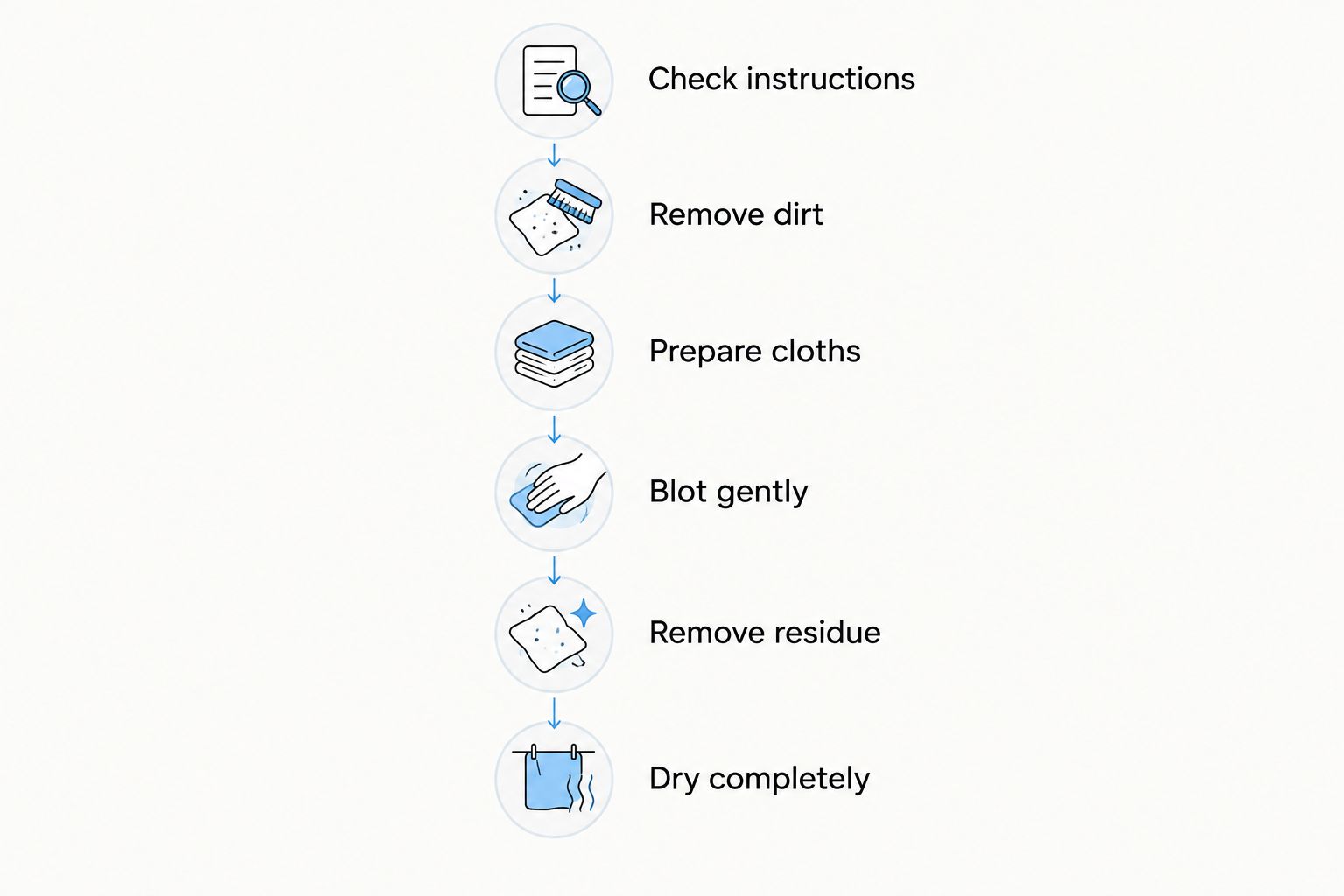
Read the label first, then clean gently and dry thoroughly. The steps below describe spot cleaning for slippers whose instructions permit water-based cleaning. If the label prohibits washing, specifies professional care, or gives a different method, follow that instruction instead.
1. Check the whole slipper's care instructions
Look inside the slipper, on its attached tag, and in the manufacturer's care information. Confirm both the cleaning method and the drying method. Machine washing permission does not automatically mean tumble drying permission.
Check whether an insole is removable before trying to lift it out. Do not pull out a footbed that is attached. If removable components have separate instructions, clean each component according to its own label.
For an unlabeled pair, ask the manufacturer about the complete construction. Naming the outer fabric is not enough. You need guidance that includes the lining, cushioning, and sole.
2. Remove loose dirt before adding moisture
Work on 1 slipper at a time so you can inspect the lining closely. Shake out loose debris, then lift surface dust with a clean, soft brush or dry cloth. Use light strokes rather than digging into the pile.
Inspect the toe area and the place where your heel rests. Separate loose grit from marks that need wet cleaning. Removing dry debris first keeps you from rubbing it farther into the lining.
Wipe visible dirt from the sole separately. Do not drag the cloth used on a dirty sole across the soft interior.
3. Prepare a gentle spot-cleaning setup
Set out 2 clean cloths: one for cleaning and one for removing residue. Use water and detergent only as permitted by the care instructions. Follow the detergent's directions rather than guessing at a strong mixture.
Dampen the cleaning cloth without leaving it dripping. Test the permitted method on a small, less visible area before treating a prominent mark. Stop if color transfers, the surface changes, or the lining separates from its backing.
A spot test helps you observe a local reaction. It does not establish that the entire slipper is safe to immerse or machine wash.
4. Blot the lining instead of scrubbing it
Press the damp cloth gently against the dirty area, then lift it away. Move to a clean part of the cloth as it picks up dirt. Keep the pressure light, especially around seams and the edge of the footbed.
Do not scrub harder to compensate for a stain that stays put. Repeated force can disturb the pile or stress a seam. If a mark remains after permitted gentle cleaning, check the manufacturer's stain advice before trying another treatment.
Avoid pouring cleaning liquid directly into the slipper. A damp cloth gives you more control over where the moisture goes.
5. Remove cleaning residue and blot excess moisture
Use the second cloth, lightly dampened with clean water, to lift detergent residue from the treated area. Follow with a dry, absorbent towel to blot moisture. Press gently without twisting the slipper or wringing its lining.
Do not keep adding detergent because the fabric still feels wet. Check for residue only after the area has dried. A damp lining and a detergent-coated lining need different responses.
If the slipper requires cleaning throughout, stop treating scattered patches and check whether a full wash is permitted. Spot cleaning is useful for localized dirt, not a substitute for every other care method.
6. Follow the drying instructions completely
For slippers that permit air drying, place them in a ventilated location with the openings exposed. Keep them away from radiators, hair dryers, and other direct heat unless the care instructions expressly permit that method. Do not assume that extra heat is a harmless shortcut.
Check inside the toe and around the footbed before wearing the pair. The outside can feel dry while the interior remains damp. A dry surface is not proof of a dry lining.
Once the lining is fully dry, gently lift the pile with a soft brush if its care instructions allow brushing. Do not brush aggressively or try to force a worn lining back to its original texture.
Which cleaning method should you use?
Choose the method your slipper's instructions permit, then match it to the extent of the dirt. Machine washing is not the default for plush slippers. A fluffy lining does not establish machine washability.
| Cleaning option | Best for | Advantage | Limitation |
|---|---|---|---|
| Spot cleaning, when permitted | A localized mark or small dirty area | Limits wetting to the area being treated | Does not clean the entire lining |
| Hand washing, when permitted | A pair whose label allows a full hand wash | Lets you control handling throughout cleaning | Wets more of the slipper and requires thorough drying |
| Machine washing, when permitted | A pair explicitly labeled machine washable | Follows an approved whole-pair cleaning method | Requires the specified cycle and separate drying guidance |
If hand washing is allowed, follow the manufacturer's instructions for water temperature, detergent, handling, and rinsing. Do not interpret hand washing as permission for prolonged soaking.
If machine washing is allowed, use the stated settings. A gentle cycle, laundry bag, or cold water setting does not override a label that prohibits machine washing. Treat those as parts of an approved method, not ways to make an unapproved method safe.
What changes the care decision in 2026?
The calendar does not change your slipper's construction. When choosing a care routine in 2026, these details matter more than a general promise that a fabric is easy to clean:
- Upper material: Plush describes a surface texture. Check the named material and its actual care instructions.
- Lining attachment: Seams and attached layers need gentle handling. Do not pull the lining away to reach a stain.
- Footbed construction: Cushioning sits beneath your foot. Confirm whether it is removable and how the manufacturer says to clean it.
- Sole material: A rubber or EVA sole identifies a material, not permission to wash the finished slipper.
- Drying instructions: Confirm whether air drying or another method is permitted before starting a full wash.
- Extent of dirt: A small mark and a dirty interior call for different amounts of cleaning, within the label's limits.
Keep the cleaning method and drying method together. A wash instruction without a clear drying plan leaves the job unfinished.
Can you put plush slippers in the washing machine?
Put plush slippers in the washing machine only when their care instructions explicitly allow it. Use the settings stated for that pair. Do not infer permission from the upper fabric, sole material, or another slipper's instructions.
If your pair has no readable label, ask the manufacturer before machine washing. A laundry bag protects against some handling, but it does not change the slipper's care requirements.
How do you keep the lining fluffy after cleaning?
Protect the lining with gentle handling, complete residue removal, and the specified drying method. Avoid twisting, hard scrubbing, and unapproved heat. After drying, use a soft brush only if the lining's care instructions allow it.
Cleaning removes dirt; it does not reverse all wear. If the pile stays flat, do not keep washing or brushing it harder in pursuit of softness.
Can you wear plush slippers while they are still damp?
Wait until the lining and footbed are completely dry before wearing plush slippers again. Check the interior rather than judging only by the upper. Do not put a damp pair into closed storage.
There is no single drying time that applies to every pair. Construction, wetting, and drying conditions differ, so check the slipper itself rather than relying on a countdown.
Choosing plush slippers for everyday comfort in 2026
Omniora plush slippers are best for shoppers choosing soft-lined comfort for everyday indoor wear. Choose the construction you want, then confirm its care instructions. Softness and washability are separate buying decisions.
| Product | Best for | Verified comfort details | Care consideration |
|---|---|---|---|
| Soft-Lined Slippers | Shoppers wanting a cushioned indoor footbed | Rounded toe, sponge insole, rubber sole | Confirm how to clean and dry the sponge insole and finished slipper |
| Plush Slippers | Shoppers wanting a plush upper and soft lining | Rounded toe, soft lining, EVA sole | Confirm the approved lining-cleaning and drying methods |
Soft-Lined Slippers offer a sponge insole for everyday wear around the house. That cushioning is part of the appeal, but it also makes checking the interior before reuse important. A clean-looking upper does not finish the drying check.
Plush Slippers pair a plush upper with a soft lining and an EVA sole. Those details describe indoor comfort, not a washing method. Buy for the feel and intended use; confirm care separately.
For a cozy gift, choose 1 pair around the recipient's size and indoor-wear preferences. Keep the supplied care information with the gift. Do not describe either pair as machine washable unless its current instructions confirm it.
Omniora's comfort essentials suit a cozier home and calmer evenings. You can consider slippers alongside sleepwear or loungewear, but give each item its own care routine rather than washing everything together by habit.


FAQ
What's the safest way to clean plush slippers at home?
Follow the care label and use gentle spot cleaning for localized dirt when water-based cleaning is permitted. Blot rather than scrub, remove residue, and follow the drying instructions.
Can I machine wash plush slippers on a gentle cycle?
Machine wash plush slippers only if their care instructions permit it. A gentle cycle does not make a non-washable pair machine washable.
Can I put plush slippers in the dryer?
Use a dryer only when the slipper's drying instructions explicitly permit it. Washing permission and tumble drying permission are separate instructions.
How long do plush slippers take to dry?
There is no universal drying time for plush slippers. Check the lining, toe area, and footbed, and wait until the whole slipper is dry before wearing it.
Can I remove the insoles to clean my slippers?
Remove an insole only if it is designed to come out. Follow its separate care instructions when provided, and do not pull at an attached footbed.
Can I use the same washing method for slippers and plush loungewear?
Use each item's own care instructions rather than one shared washing method. Slippers include soles and footbeds that are not part of ordinary loungewear construction.
What should I check before buying Omniora slippers as a gift?
Check the recipient's size, preferred indoor comfort, and the chosen pair's current care instructions. Keep the care information with the gift so the recipient can clean it correctly.
One last thing
Ask about cleaning before you choose your next cozy pair. When buying plush slippers in 2026, read the care instructions with the same attention you give fit and softness. The easiest pair to care for is the one whose approved routine fits your home—not simply the one that looks washable.
For the pair you already own, keep the label readable or save its instructions. That small step makes the next cleanup calmer and removes the temptation to guess.